Shocking Truth About AI Automation That No One Is Talking About!
Artificial intelligence and automation are no longer futuristic ideas but present-day forces quietly reshaping how the world works.
From factories and offices to hospitals and creative industries, AI systems are increasingly performing tasks that once required human effort. While many people see this as progress, others are beginning to realize that the transformation is deeper, faster, and more complex than most discussions suggest AI Human Agents Business.
How AI Automation Is Quietly Reshaping Industries
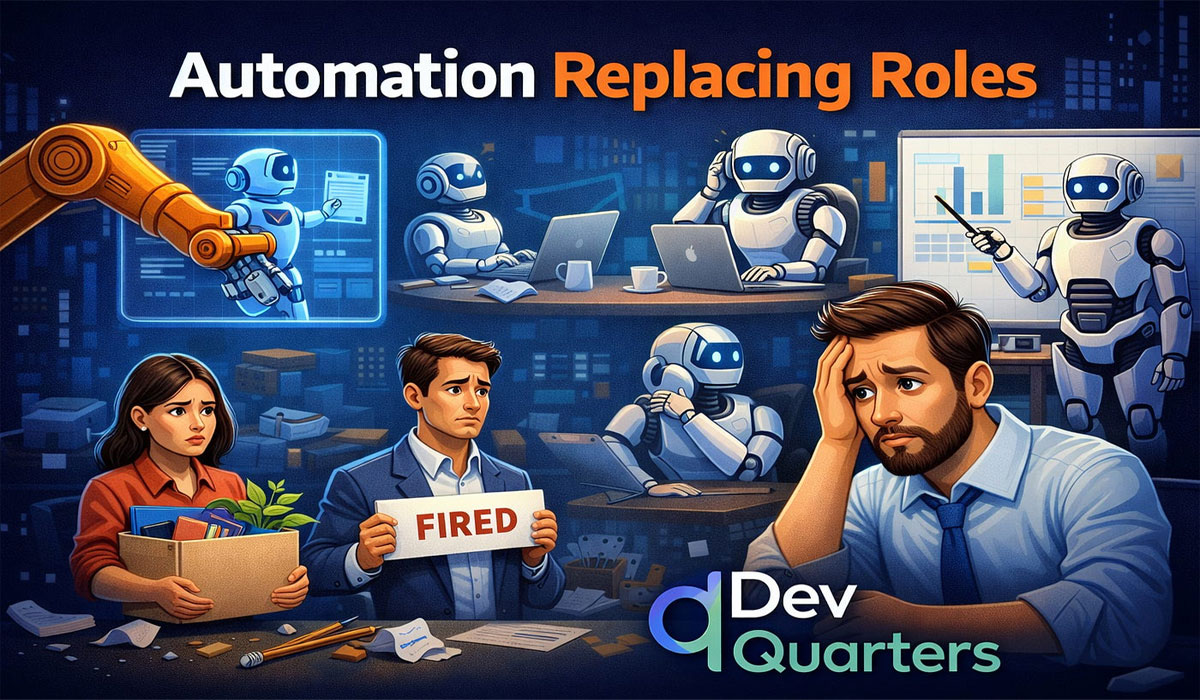
AI automation is transforming industries by replacing repetitive and predictable tasks with machine-driven efficiency. In manufacturing, robots now handle assembly lines with precision and speed that reduce errors and increase production output. This shift allows companies to lower costs while producing goods at a faster rate than ever before.
In the service sector, AI-powered systems are taking over roles in customer support, data entry, and scheduling. Chatbots and virtual assistants are now capable of handling thousands of queries simultaneously, reducing the need for large human support teams. This change improves efficiency but also reduces the number of entry-level jobs available in many industries.
Even creative fields are not untouched. AI tools can now generate text, images, music, and even video content, challenging the traditional idea that creativity is uniquely human. While these tools are not perfect replacements, they are rapidly improving and becoming part of everyday workflows in marketing, design, and media production.
The Hidden Impact on Jobs and the Workforce
One of the most debated aspects of AI automation is its impact on employment. Many routine and repetitive jobs are at the highest risk of being automated, especially roles in manufacturing, administration, and basic customer service. This creates uncertainty for workers who rely on these positions for stable income.
However, the shift is not simply about job loss but also job transformation. New roles are emerging in AI management, data analysis, cybersecurity, and machine learning development. These jobs often require higher levels of education and technical skills, creating a gap between displaced workers and new opportunities.
This transition also highlights the importance of reskilling and education. Workers who adapt by learning new digital and technical skills are more likely to benefit from the AI revolution. Governments and organizations around the world are beginning to invest in training programs to help people adjust to this changing labor market.
Also Read: Online Business Explosion: A New Era Of Digital Entrepreneurs Begins
The Economic and Social Ripple Effects
AI automation does not only affect individual jobs but also has broader economic consequences. By increasing productivity, AI can boost economic growth and reduce operational costs for businesses. However, this growth is not always evenly distributed, leading to concerns about inequality.
As companies rely more on automation, wealth can become concentrated among those who own and control AI technologies. This raises questions about fairness and the future distribution of income in society. Without proper policies, the gap between high-skilled and low-skilled workers may continue to widen.
Socially, automation is changing how people interact with work itself. Traditional ideas of career stability are being replaced by more flexible, project-based work structures. While this offers freedom for some, it also introduces uncertainty and instability for others who prefer long-term employment security.
The Future of AI Automation and Human Collaboration
Despite concerns, the future of AI automation is not necessarily about replacing humans entirely. Instead, it is increasingly moving toward collaboration between humans and machines. AI systems are designed to assist rather than fully replace human decision-making in many fields.
In healthcare, for example, AI can analyze medical data quickly, but doctors still make final decisions based on experience and judgment. In business, AI can provide insights and predictions, but human leaders are still needed to interpret results and make strategic choices. This partnership enhances both speed and accuracy.
Looking ahead, the most successful societies will likely be those that integrate AI responsibly. This means balancing innovation with ethical considerations, protecting jobs where possible, and ensuring that technological progress benefits a wide range of people rather than a small group.
Conclusion
AI automation is reshaping the world in ways that are both powerful and unavoidable. It is changing industries, transforming jobs, and influencing economic and social structures at a global scale. While it brings significant challenges such as job displacement and inequality, it also creates new opportunities for innovation and growth. The key to navigating this future lies in adaptation, education, and a balanced approach where humans and machines work together rather than compete.
Image Source:
- First Image from fenixgolf.co.uk
- Second Image from topgolf.co.id
About the Author